Spin-Offs
The research conducted by food4future is intended to continue beyond the confines of the laboratory and the project timeline. Our goal is to provide new impetus for sustainable agricultural and food systems that will have an impact beyond the project’s boundaries and be adapted to new geographical, social, and economic contexts. A key approach here is to develop spin-offs—that is, projects, initiatives, or partnerships that stem directly from the scientific findings and technological developments of food4future.
Spin-offs emerge when stakeholders from academia, society, and the professional world come together to explore new ideas: they address unresolved questions, delve deeper into specific aspects of research, or test new applications in real-world settings. In this way, they help ensure that knowledge is not only generated but also sustained, further developed, and made applicable to specific challenges.
SolKuBim
Brine-based cultivation systems for freshwater macroalgae and microalgae
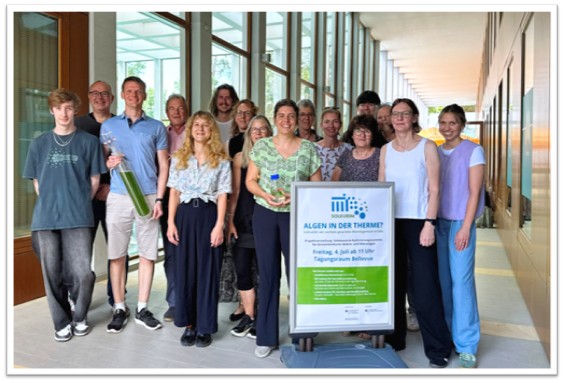
Algae cultivation in Bad Saarow
The SolKubiM project -brine-based cultivation systems for inland macro- and microalgaebuilds directly on findings from food4future and applies them to an unusual but promising application scenario: algae production at the Bad Saarow thermal spa. The basis for this is the thermal water sourced there, a mineral-rich remnant of a primeval ocean that is now used for bathing and strictly monitored. Excess treated water is ideal for cultivating the native algae species studied by food4future, such as Ulva compressa, thereby making an existing resource cycle more sustainable.
The algae grow in the spa’s temperature-controlled cellars, where they are protected from disruptive environmental factors and can thrive under optimal conditions. This demonstrates that algae production does not have to be confined to coastal areas, but can also be carried out inland with high quality. SolKuBiM demonstrates how research from food4future is opening up new areas of application and how regional value-creation potential can be tapped in the future - right in the heart of Brandenburg and in a place where you’d least expect to find an algae farm: beneath the swimming pools of a thermal spa.
Contact
Leibniz Institut for Horticultural Sciences (IGZ)
Theodor-Echtermeyer-Weg 1
14979 Großbeeren
Website
www.igzev.de
Interaction with associated partners
food4future Konsortium, HTW Berlin, Bad Saarow Kur GmbH, IGV GmbH, Universität Bayreuth, Viva Maris GmbH
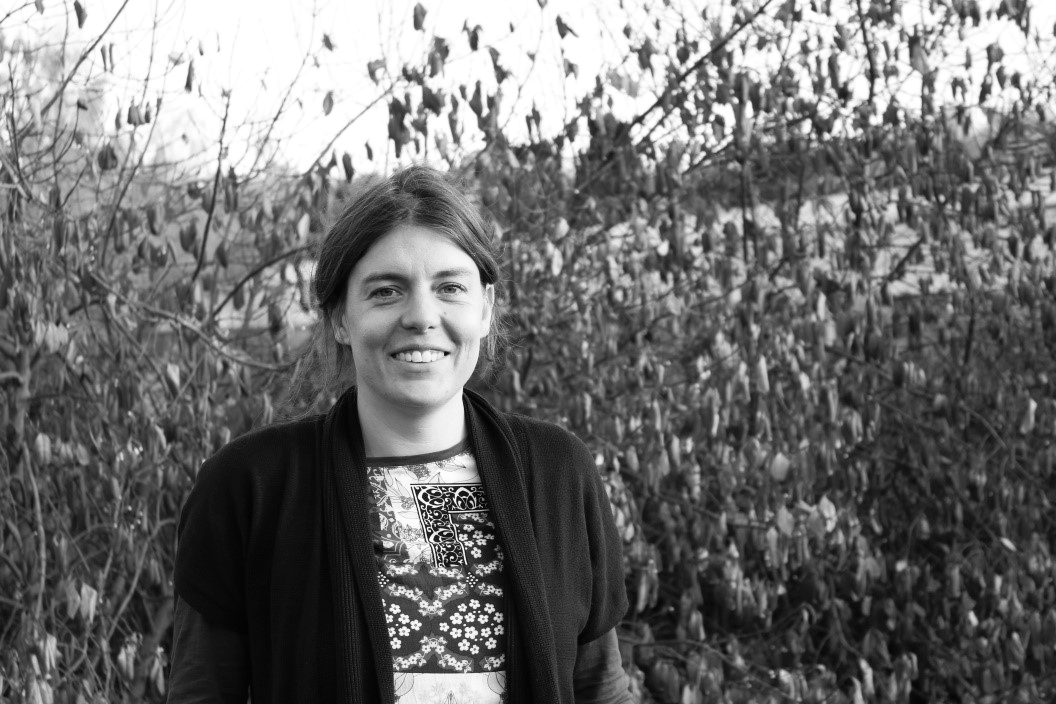
Dr. Anna Fricke is a researcher in the "Plant Quality and Food Safety" program area at the Leibniz Institut for Horticultural Sciences (IGZ). Her research focuses on the biodiversity, ecophysiology, and utilization of benthic algae. In the food4future “Macroalgae” project, she is responsible for cultivating macroalgae and investigating their potential applications in the food sector.


NaFuVer
Sustainable functional integration in composite materials
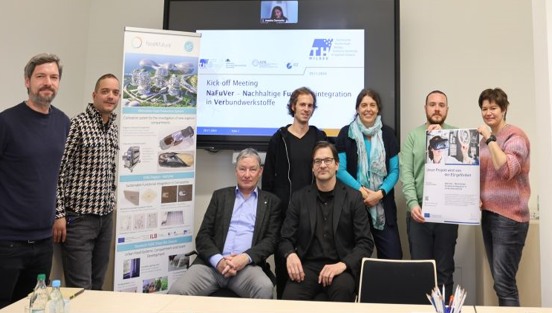
NaFuVer with representatives from the participating universities and research institutions.
NaFuVer represents a new approach to sustainable materials and sensor technology. The goal of this collaborative project is to develop and integrate bio-based, piezoelectric sensors into composite materials - as an environmentally friendly alternative to conventional fluorinated plastics such as PVDF, which are increasingly coming under criticism due to their environmental and health impacts (PFAS, or “forever chemicals”).
The focus is on the natural substance chitin - the second most abundant biogenic polymer after cellulose. Chitin and its derivative chitosan, which are derived from edible insects, among other sources, are biodegradable and piezoactive, opening up new possibilities for resource-efficient sensor technology. The project aims to specifically improve their piezoelectric properties, for example through increased crystallinity, molecular orientation, nanofillers, and optimized manufacturing processes.
A key innovation is the functional integration of sensors directly into composite materials. This results in lighter, more material-efficient components that can monitor their own condition - for example, in machinery, vehicles, buildings, or agricultural equipment. At the same time, recyclability is improved, as problematic fluoropolymers are eliminated and wood composites and recyclable resin systems are increasingly used.
NaFuVer is supported by an interdisciplinary consortium comprising the Technical University of Applied Sciences in Wildau, the Eberswalde University for Sustainable Development, the Leibniz Institute for Agricultural Engineering and Bioeconomy, and the Leibniz Institut for Horticultural Sciences (IGZ).
With its focus on bio-based materials, circularity, and smart materials, NaFuVer makes an important contribution to sustainable materials research and addresses key challenges facing future production and food systems. As a spin-off, the project serves as a prime example of how nature-based innovations from the agricultural and bioeconomy can find their way into industrial applications.
Contact
Technische Hochschule Wildau
Hochschulring 1
15745 Wildau
Website
www.th-wildau.de/forschung-transfer/
Interaction with associated partners
food4future Konsortium, IGZ e.V., TH Wildau, ATB, HNEE
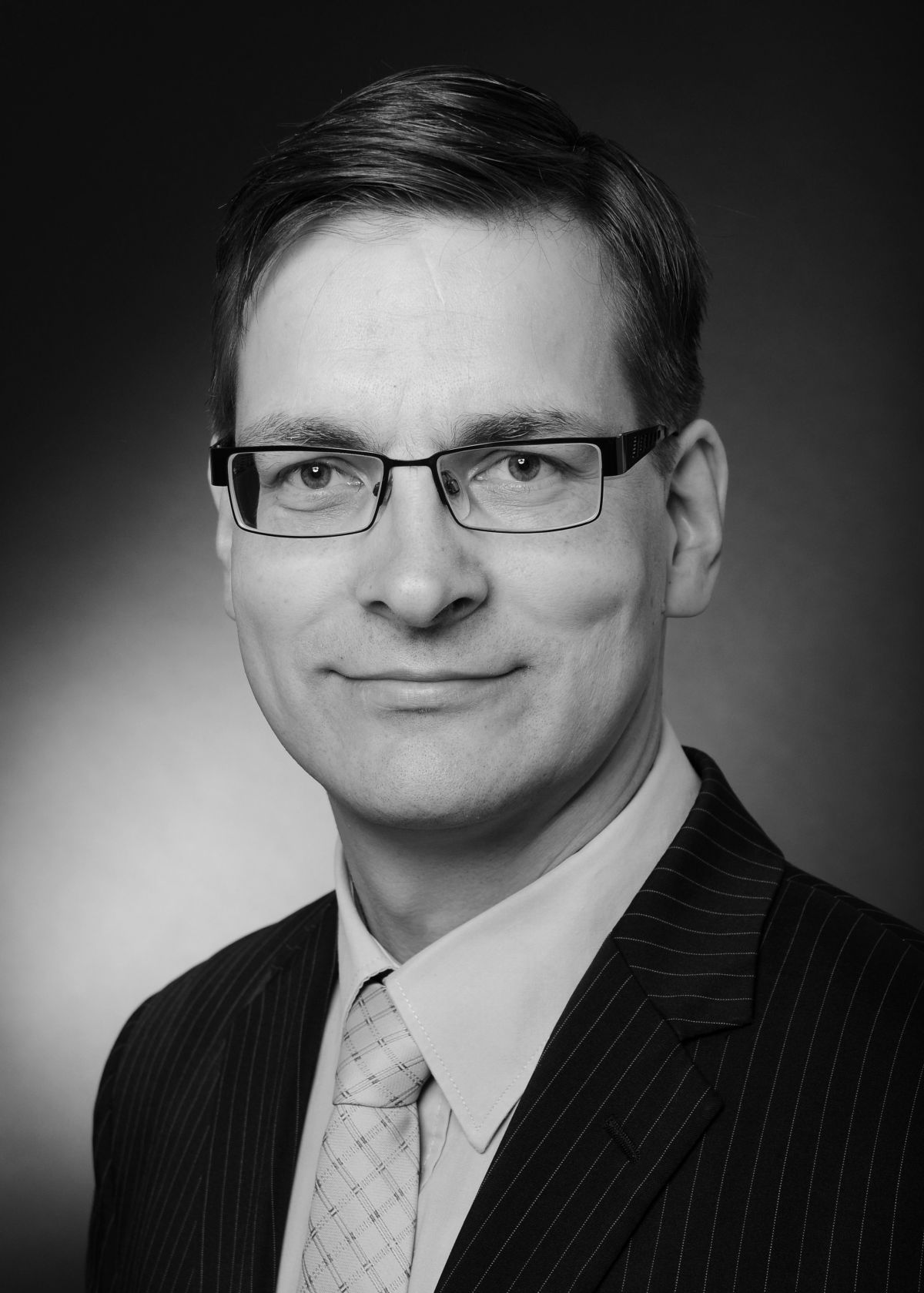
Prof. Dr. Christian Dreyer
Project Manager (TH Wildau)
christian.dreyer@th-wildau.de
T +49(0) 3375 2152-280
Prof. Dr. Christian Dreyer is deputy director of the PYCO research division for polymer materials and composites at the Fraunhofer Institute for Applied Polymer Research IAP and a professor of fiber-reinforced composite materials technologies at the Technical University of Applied Sciences in Wildau. In addition to developing new fiber-reinforced lightweight materials, his work focuses on researching alternative curing methods for thermosetting resins using UV radiation and microwaves. At food4future, he serves as project coordinator for the subproject “Further Development and Upscaling…” and leads a project team consisting of engineers, chemists, and biosystems engineers.